Pages

Sunday, 22 June 2014

Foreign NGOs used Rahul as protector (Sunday Guardian)

MADHAV NALAPAT  New Delhi | 21st Jun 2014
igh-profile foreign NGOs active during 2004-2014 in blocking development projects in India, have contacts with aides to Congress vice-president Rahul Gandhi; while some key foreign NGO functionaries have access to him on a scale denied even to Cabinet ministers during the ten years of the UPA government, say sources within the Congress party. They say that "Rahul Gandhi has a partiality towards global NGOs" and that he has "frequently intervened on their behalf". UPA ministers close to Rahul Gandhi, such as Kapil Sibal and Jairam Ramesh, were also seen as deferential towards selected NGOs that were targeting development projects across India. As details of Rahul Gandhi's visitors and travels remain secret and the man himself remains inaccessible, there has been no way of independently verifying such claims, which are denied by those close to the Congress vice-president.
Interestingly, although they have fought long and hard against both coal mining as well as power generation in India, NGOs such as Greenpeace are themselves reported by relevant authorities as being indirect recipients of funds from heavily polluting mining and industrial lobbies, albeit those active in developed countries. The MacKnight Corporation, which controls the mining conglomerate 3M, is held by the agencies to be a major indirect funder of Greenpeace through so-called philanthropic foundations such as the Packard Foundation. For its operations in India, Greenpeace is reported to have received Rs 1 crore from a US-based "Climate Works Foundation", which itself was the recipient of funding from institutions linked to commercial interests.
Interestingly, a large proportion of the funds received by such NGOs have been recorded as having been made by small donors, so that the identities of the donors get concealed. This opens the door for intelligence agencies to funnel cash to such NGOs through the guise of "small donors", a ruse equally favoured by politicians in India caught by Income-Tax authorities. Research done by the Intelligence Bureau and other agencies into the funding of NGOs active in stalling development projects across the country show that the ultimate source of much of the funds received by them come from commercial and other interests with a direct stake in particular outcomes in India, such as a slowing down of energy self-sufficiency.
The Intelligence Bureau (IB) has identified nine individuals in Greenpeace who have been visiting India several times each year throughout the period in office of the Manmohan Singh government. These individuals are all from advanced countries, and at least three of them were active in Tahrir Square in Egypt in 2011, and more recently, two were involved in the Maidan Square agitation in 2013, which resulted in a change of regime in Ukraine's Kiev. The functionaries of Greenpeace who are under investigation have met with a wide cross-section of political activists, including from major political parties, and have given several dozen activist leaders training in political protest and in ensuring control of the streets, so that the normal functioning of government gets choked. It is known that such external experts in agitation have also been active in Bangladesh, where there have been repeated periods in which normal life in Dhaka and in some other cities got disrupted by street protests. However, Greenpeace denies any claim of bias or hidden agenda and says that its sole motivation is to "protect the planet".
Their supporters point out that several of the activities of Greenpeace, such as its efforts at stopping illegal whaling, are laudable.
At least four of the nine foreign nationals active in Greenpeace operations in India, who have been identified by the IB as having been hyperactive in orchestrating protests against major projects in the country, "have close links to those in Rahul Gandhi's inner circle", according to a Congress functionary. The functionary claimed that "at least two of the nine are personally known to Rahul, who met them and others from such outfits when abroad". Those close to Rahul Gandhi deny this, saying that "the Congress vice-president is a patriot who would never do anything to hurt the interests of India".
Although the IB had built up a sizeable dossier on these foreign nationals over the past three years, and had warned of the disruptive nature of their activities as also their intimate contact with local activists and politicians, Prime Minister Manmohan Singh and successive Home Ministers refused to take action against the NGOs.
Incidentally, several children of key officials and opinion leaders in India have been employed at generous salaries by some of these NGOs, while others have set up their own NGOs and received funding from foreign agencies and even governments, much of which gets spent on travel, office and salaries. Even in the case of the Koodankulam protests, which held up the commissioning of the nuclear power reactor there for nearly a year, it was only after The Sunday Guardian exposed the role of foreign-funded NGOs in the agitation that the UPA was forced into some action against them (Foreigners hold Indian nuclear power hostage, 6 November 2011).
Interestingly, a charity with close links to France (which is in competition with Russia over the supply of nuclear reactors to India) was among the major foreign funders of the 2009-2012 agitation against the Russian-built nuclear power plant at Koodankulam. It remains to be seen whether Home Minister Rajnath Singh will pluck up the courage to offend powerful lobbies in the US and the EU and take action against the nine foreign NGO specialists in agitation, one of whom (Benjamin Hargreaves) is reported to be "organising construction workers so that urban housing activities get affected", according to investigative agencies tracking his movements.
Incidentally, such activism by foreign nationals is a breach of both the Foreign Contribution Regulation Act (which bans the funnelling of foreign money in domestic protests) as well as the Indian Penal Code, but has thus far been allowed to continue unchecked because of fear of offending the powerful states using NGOs to carry out their agenda in India.
Apart from nuclear power plants, foreign NGOs have trained their sights on coal-based power plants as well. They have been opposing the addition of the critically needed 100,000 MW of additional power, half of this in Arunachal Pradesh, by seeking to incentivise locals to fight against the setting up of power plants, building on their success in Orissa, where (with help from Rahul Gandhi) they blocked a major metals plant (Vedanta), which would have provided a total of 145,000 extra jobs and thereby transformed the presently very poor region.
Even the ICRC (International Committee of the Red Cross) appears to be carrying out activities different from its stated mission. "The only prison under-trials the ICRC in India has shown any interest in are those jailed in Kashmir, and that too only those who are militants," said a senior official from the state, adding that "some very rich Gulf states whose nationals are giving money to groups spreading militancy in the Valley are major funders of the ICRC".
Interestingly, even Amnesty International showed little hesitation in accepting a huge donation of $130,000 from a trust which was founded by an NRI who was recently levied a $300 million fine by US authorities for financial misdemeanours, and who has escaped from the US to Gibraltar, according to a senior official. The individual could not be reached for comments
Other fields in which foreign NGOs have been active is in influencing officials working toward the framing of educational and agricultural policies. "Telephone records show that foreign NGO workers gained easy access to top officials in key ministries during the UPA period, and have in some cases become intimate friends with them," according to a senior official tracking such linkages.
NGOs have become an important tool of coercive diplomacy on the part of the US and some of its partners, and have been extensively deployed in both the so-called "Arab Spring" as well as in the "Colour Revolutions" in East Europe, including the recent forcible changeover of government from a Russia-friendly to a Russia-phobic head of state in Ukraine. While some, such as the National Endowment for Democracy and the World Movement for Democracy are openly funded by the US State Department, others operate under the cover of private corporations eager to gain goodwill among government agencies by doing their bidding in funding NGOs tied to secretive official agendas. Another tier of financial support is provided by so-called "philanthropic" foundations, each of which has a clear agenda. Numerous US and EU-based "conflict resolution" agencies that are active in India have for years adopted a Pakistan-friendly line on Kashmir and have been nudging policymakers in Delhi towards aligning policies in a manner which would fully meet the interests of key NATO member-states.
Apart from Greenpeace, another foreign NGO that has come to the attention of the IB is Cordaid, which is funded by the Dutch government, and has been active in seeking to block uranium mining in Meghalaya as well as oil exploration in Manipur. Had uranium been mined in an adequate way in Meghalaya, there would have not been the excuse (of lack of uranium) given by Manmohan Singh in order to constrain Indian capabilities through the 2005-08 nuclear deal, while Manipur is known to have vast reserves of oil and gas. Were these to be exploited, the interests of oil majors based within the NATO bloc would get affected. "Were the government to allocate (the Manipur oil and gas fields) to US or European oil companies, we can be sure that Cordaid would stop trying to create obstacles to such prospecting," a senior official claimed, adding that "although the purported reason for Cordaid activities in the Northeast is crimes against women, in fact they are focusing on preventing the extraction of minerals that would make the region rich".
Interestingly, although their access to the media has ensured largely positive coverage of their activities in India, thereby ensuring a slew of reports attacking the IB for its investigation of NGOs, the fact is that during the three years that such bodies have been intensively monitored by that agency, only about 1% of the NGOs that have applied for FCRA clearance have had their requests rejected, while less than 3% of the NGOs active in India have been red-flagged for activities which are deemed prejudicial to domestic laws as well as the public interest. Also, while the IB has been using FCRA records to track the activities and sources of funding for several NGOs, the fact is that several times the NGOs surveyed by the IB get funded through hawala channels. Thus far, authorities in India have shown little appetite to crack down on such operators. The hawala trade, as also the booming narcotics business, is controlled from across the border, by elements working in close coordination with the ISI.

Friday, 20 June 2014

ISIS bribed its way to victory (Pakistan Observer)


M D Nalapat
Friday, June 20, 2014 - Given the immense reach of Wahabbi lobbies funded by individuals in Qatar, Saudi Arabia, Kuwait and elsewhere on US policy, it is no surprise that the Obama administration has yet to notice that there are numerous Sunnis in Nuri al-Maliki’s coalition government in Baghdad. This is in contrast to countries in the region allied to the US, which have - with the partial exception of Kuwait - kept Shia elements out of the higher levels of government. Indeed, in the case of both Saudi Arabia as well as Bahrain, a policy of seeking to marginalise the Shia has been carried out for generations, without any protest from Washington.

Simultaneously, beginning in early 2011, then Secretary of State Hillary Rodham Clinton joined hands with France and the UK in first unleashing US-funded NGOs on the established governments in countries such as Egypt. At the same time, both through backchannels as well as publicly, the established government in Cairo was warned by the NGO-heavy Clinton team to desist from using force against those publicly asking for the capture and hanging of Hosni Mubarak. As took place in Russia in 1917 or in Iran during the 1979 fleeing of the Shah of Iran from his country, the chaos which resulted in the abrupt dissolution of state authority got filled by those who were well organised, even if their support base was minuscule. Although named “Blosheviks” ( “The Majority”), the reality was that Vladimir Lenin and his party had only a very narrow support base across the country, although this grew to an extent in 1917 when it called for an end to the war, in contrast to Alexander Kerensky and his moderates, who sought to continue to wage a hopeless battle against the German armies. It was the discipline and ideological fervour of the Bolsheviks that enabled its takeover of power that year, and its consolidation in the decade which followed. In like manner, Ayatollah Ruholla Khomeini had much fewer followers than the moderates who rallied behind him during 1979 in the belief that he would step aside once the Shah of Iran became history

They were taken unawares when Khomeini used the war launched on Iran by Saddam Hussein soon after the toppling of the Pahlavi autocracy to stamp out dissent against his rule. In the case of Egypt, the Muslim Brotherhood took over the levers of power,all except the military and very soon revealed its intention of fundamentally altering the secular character of Egypt, a country where Christians and Muslims lived together in peace for centuries, until the Muslim Brotherhood began its quest to monopolise power in 2012. Unlike in the case of Iran, the overwhelming majority of the people of Egypt as well as the military rallied against the attempted takeover of the state as well as the nation by what has remained in essence a Wahabbi group.

Interestingly, despite their professed commitment to secular values, both the US as well as their primary EU partners have supported Wahabbi elements across the globe. Since 2011,they have in effect joined hands with the Wahabbis in the latter’s efforts at marginalising the Shia across the region, the way which has been the reality in Saudi Arabia and Bahrain for long. Hence there is no surprise at the stand of General David Petraeus, who took the credit for the cooling off of militancy in Iraq caused not by a surge in US troops but by the withdrawal of US forces from the intrusive patrolling they used to routinely indulge in during past days. The lower visible profile of US troops led to a reduction in the anger of the people of Iraq at being occupied by a foreign force, thereby lowering the statistics of deaths caused by anti-US insurgents, a reduction which has been inaccurately credited to Petraeus.

As in 1996, when the (Clinton-backed) Taliban militia took over Kabul by the simple expedient of bribing rival commanders, the ISIS victory on the battlefield has been caused by bribing senior Iraqi military commanders, who ordered the forces under them to desist from resisting the extremists. Several of them paid for this folly with their lives afterwards, being killed in the most brutal way by ISIS. It would not be difficult to identify the money trail linking donors in Kuwait, Qatar, Turkey and Saudi Arabia to the ISIS

battalions in the field in Iraq, nor would it be difficult to establish the provenance of the weapons and other supplies being used by the extremist militia to gain control of territory in Iraq. However, it is unlikely that CNN,BBC or Al Jazeera would do any reports of the sources of funds and weapons for ISIS, for the trail would lead to locations inconvenient for those who act as patrons for these news channels. Unless at least a few dozen of the individual donors to ISIS get identified and arrested in their countries of origin, which include the UK, Canada and France besides Qatar, Turkey, Kuwait and Saudi Arabia, the flow of money to that organisation will continue. Those monitoring developments in the region say that more than $4 billion has been funnelled to extremist groups in the region since 2011,much of it through regular banking channels. This explains the ease with which ISIS has thus far been able to bribe senior Iraqi commanders into running away from the battlefield, thereby leaving the people under their protection to the depredation of the extremists. The continuing inaction by the US, guided as policy is in that country by those such as David Petraeus who favour Wahabbism, is going to result in Baghdad having to turn to Tehran and Moscow for support. Rather than be destroyed, the established authority in Iraq will turn to a “Coalition of the Willing” that would move against the extremists before they make greater advances. The delay by President Obama in responding to the request of Baghdad for immediate bombing raids on ISIS positions will result in the entry into the conflict of Tehran and Moscow.

Since 2011, NATO has followed policies in West Asia that have unlocked the doors to open war between Wahabbis and Shia, with NATO backing the former. Should Moscow come on the side of the latter, geopolitical consequences of such a move would be immense. Hopefully, President Obama will bring his team to their senses, and ensure that immediate assistance is given to Baghdad to repel ISIS. Otherwse, fire now burning in Syria, in Libya and in Iraq will soon spread, not only to Saudi Arabia and Turkey but to France as well.

Wednesday, 18 June 2014

The Origins of a Re-Taking (Lila)

MD Nalapat dtr--bw-150

Madhav Das Nalapat

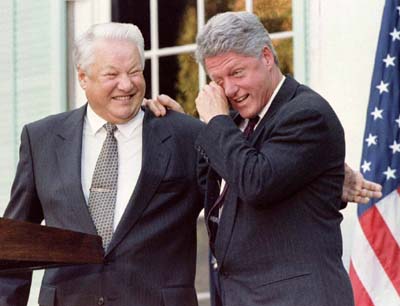
The re-tak­ing of the Crimean penin­sula by Rus­sia has old ori­gins. It traces back to the in­ter­ac­tion be­tween the Clin­ton ad­min­is­tra­tion in the US and the im­me­di­ate post-So­viet regime in Moscow led by Boris Yeltsin.
In­stead of show­ing any mag­na­nim­ity to­ward a fallen foe, the Clin­ton ad­min­is­tra­tion adopted the same ap­proach as did the Al­lied pow­ers at Ver­sailles in 1919, of seek­ing to de­grade the Russ­ian Fed­er­a­tion’s tech­no­log­i­cal and sci­en­tific ca­pa­bil­i­ties to a level that would crip­ple it from chal­leng­ing in fu­ture not only the US but its major part­ners in North At­lantic Treaty Or­ga­ni­za­tion (NATO) — Ger­many, France and the UK. In their ea­ger­ness to ‘slash and burn’ in­dige­nous S&T ca­pa­bil­ity in Rus­sia, and act­ing on the prin­ci­ple that, while Moscow was at the time docile, it could in fu­ture once again be­come malev­o­lent – in the US and NATO per­cep­tion – the need to de­grade its sys­tems and ca­pa­bil­i­ties once and for all be­came ur­gent.
Bill Clin­ton still en­joys world­wide pop­u­lar­ity,
but what marks did he leave on in­ter­na­tional geopol­i­tics?
While Pres­i­dent Clin­ton has re­mained im­mensely pop­u­lar in his own coun­try and in much of the rest of the globe, when ex­am­ined with a lens undis­torted by the type of pseudo-schol­ar­ship that passes for geopo­lit­i­cal analy­sis in some coun­tries, his record has been abysmal. It was, for ex­am­ple, under Bill Clin­ton’s watch that Al-Qaeda be­came a sig­nif­i­cant force dur­ing the 1990s. Rather than seek­ing to elim­i­nate the Wa­habbi fa­nat­ics who suf­fuse quasi-ter­ror­ist bod­ies such as the Tal­ibans, the Clin­ton ad­min­is­tra­tion went out of its way to as­sist them in the 1990s, qui­etly cel­e­brat­ing when they took over Kabul in 1996. A decade later, Hillary Clin­ton led the dis­as­trous pol­icy of back­ing Wa­habbi ex­trem­ists in Libya, and there­after in Syria, to over­throw dic­ta­tors who were in­deed bru­tal but truly sec­u­lar.
The ini­tial re­joic­ing over Gaddafi’s fall did not last for long
When NATO turned on Muam­mar Gaddafi in Libya in 2011, and against Bashar al-As­sad in Syria a year later, it dealt with two lead­ers who were bru­tal only in a ‘micro’ sense, tak­ing ac­tion se­lec­tively against spe­cific op­po­nents rather than against the vast swathes of the pop­u­la­tion that Wa­habbi ex­trem­ists in­vari­ably tar­get. It is the giv­ing of weapons, cash and train­ing to Wa­habbi ex­trem­ists in Libya, and there­after in Syria, which has led to the pre­sent re­vival of Al Qaeda. This in­cludes the ef­forts from off­shoots of that or­gan­i­sa­tion to take con­trol of more ter­ri­to­ries in Iraq and Syria, in ad­di­tion to what they al­ready hold as a re­sult of the back­ing given to them by cer­tain states of the Gulf Co­op­er­a­tion Coun­cil (GCC).
quote crimea mdn 2
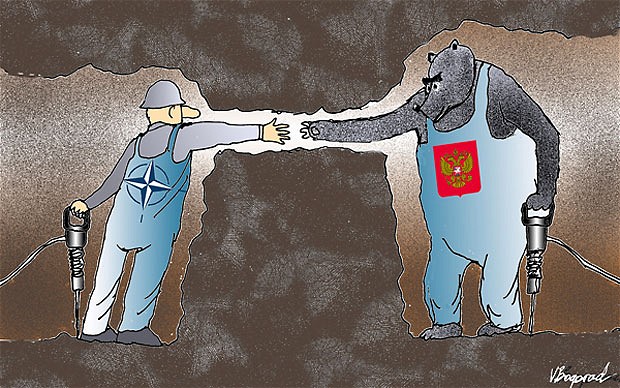
An­other grave error made by the Clin­ton ad­min­is­tra­tion in the 1996-2001 pe­riod was to seek to en­force terms on Moscow that would in ef­fect make it a de­pen­dency of NATO. An east­ward ex­pan­sion of the al­liance was car­ried out at the pre­cise mo­ment when its mil­i­tary jus­ti­fi­ca­tion – as a bul­wark against a So­viet in­va­sion – got re­duced to in­signif­i­cance. The con­tra­dic­tion be­tween the less­ened need for NATO and the mas­sive scale of its ex­pan­sion can be ex­plained as sim­ply an­other means of hu­mil­i­at­ing the Russ­ian Fed­er­a­tion, much the same way as Ger­many was shamed in 1920 by the French mil­i­tary oc­cu­pa­tion of the Rhineland. Of course, with Boris Yeltsin, the al­liance had a Head of State in the Russ­ian Fed­er­a­tion who was a pris­oner of the mafias con­trol­ling vast por­tions of the post-So­viet econ­omy. These mafias were al­most al­ways close to in­tel­li­gence agen­cies in the NATO bloc, who ma­nip­u­lated them in order to sub­serve the Clin­ton pol­icy of steady degra­da­tion of the in­dige­nous ca­pa­bil­i­ties of the Russ­ian Fed­er­a­tion. It was only after Vladimir Putin took over from Yeltsin that the coun­try fi­nally got a leader who put Rus­sia rather than NATO first. Both Yeltsin and his pre­de­ces­sor Mikhail Gor­bachev had done the re­verse.
The in­volve­ment of NATO in US-Rus­sia re­la­tion­ships
con­tributed to the geopo­lit­i­cal weak­en­ing of the lat­ter
Ini­tially, Putin ig­nored the fact that nei­ther Ger­many nor France would allow the Russ­ian Fed­er­a­tion to ei­ther enter the Eu­ro­pean Union or to reach the level of pri­macy within Eu­rope that the Russ­ian Fed­er­a­tion’s size and ca­pa­bil­i­ties en­ti­tle it to. In fact, after two terms, Putin handed over the Pres­i­dency to a Eu­ro­peanist in much the same mould as Gor­bachev or Yeltsin: Dmitry Medvedev. But, thanks to the con­tin­u­ing dom­i­nance of Putin in the inner coun­cils of gov­ern­ment in Moscow, the dam­age done by Medvedev was not on the same scale as that which took place under Yeltsin. Nonethe­less, the Medvedev in­ter­reg­num em­bold­ened the US and its part­ners to con­tinue with the Clin­ton pol­icy of seek­ing to tether Rus­sia down, rather than to em­brace it in an equal part­ner­ship.
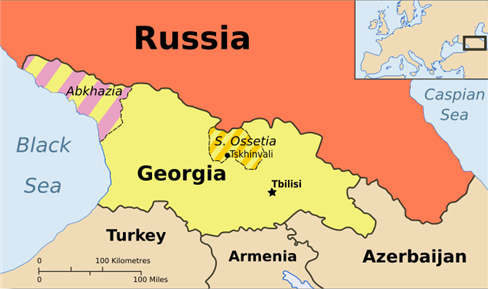
Rus­sia’s claim for Geor­gian lands was prob­a­bly
the first phase of a larger de­mand
quote crimea mdn 3
Fi­nally, and de­spite his sur­round­ing him­self with St Pe­ters­burg Eu­ro­peanists, Vladimir Putin un­der­stood that the US and the EU would never ac­cept a Rus­sia that was any­where close to being an equal part­ner of these two en­ti­ties. The first symp­tom of that was his takeover of a Rus­sianised seg­ment of Geor­gia. The next was the takeover of Crimea. This will be fol­lowed by the par­ti­tion of Ukraine and a pol­icy of link­ing hands with Delhi and Bei­jing in order to di­lute the im­pact of the Ver­sailles-style poli­cies pur­sued by NATO to­wards Rus­sia, since the time when Bill Clin­ton was Pres­i­dent of the United States of Amer­ica.
Un­for­tu­nately, taken as a col­lec­tive, the NATO al­liance still re­sponds as though the globe fol­lowed a 19th cen­tury or, worse, a 20th cen­tury ma­trix. The 21st cen­tury is wit­ness­ing the re-emer­gence of Asia, and there will cer­tainly be a com­ing to­gether of the major pow­ers of the con­ti­nent rather than the in­tra-Asia con­flict pre­dicted by schol­ars in the US and the EU. Today, the ground re­al­i­ties do not per­mit the same depth, speed and range of NATO in­ter­ven­tion as in the 19th or even the first half of the 20th cen­tury. That the Russ­ian Fed­er­a­tion has been sub­jected to the same ef­fort to down­size any po­ten­tial chal­lenge to NATO in­di­cates ac­cep­tance of the fact that Moscow is teth­ered within Asia rather than Eu­rope – ir­re­spec­tive of what the St Pe­ters­burg in­tel­lec­tu­als say. Fol­low­ing the mind­set of past eras, the key mem­ber states of NATO refuse to ac­cept that coun­tries out­side the bloc have the chem­istry and the po­ten­tial to be equal part­ners of the al­liance, rather than re­main in a sub­sidiary po­si­tion. By seek­ing too much, the al­liance is hav­ing to set­tle for much less, as in Ukraine.
http://www.lilainteractions.in/2014-6-24-crimea-heart-russian-pre-occupation-md-nalapat-willie-mc-loud-dominik-tolksdorf/#willie_mc_loud

Monday, 16 June 2014

The people expect change, Mr Jaitley (Sunday Guardian)

MADHAV NALAPAT
ROOTS OF POWER
M.D Nalapat is the Editorial Director of The Sunday Guardian.

Union Finance Minister Arun Jaitley speaks in the Rajya Sabha in New Delhi on Tuesday. PTI
his columnist is not among the fortunates who have had extensive interaction with Finance & Defence Minister Arun Jaitley, despite having known this very personable of politicians for 25 years. The man who is widely considered as having the second most important job in the country after Prime Minister Narendra Modi, has invariably been courteous, and with a boyish sense of humour. Such warmth contrasts with his predecessor, the dour if cerebral Palaniappan Chidambaram, who seemed to view most of those who floated into his space as nuisances or as nincompoops. Although Chidambaram showed himself to be innovative in his 1997-98 budget, cutting tax rates and calling for an amnesty designed to bring black money into the tax, that spirit had clearly been drained out of him in his second incarnation as the Union Finance Minister. Much to the joy of the BJP, Chidambaram refused to lower tax rates, and instead re-established the punitive tax regime favoured by Indira Gandhi, perhaps in homage to UPA chairperson Sonia Gandhi. From the 1997 Dream Budget to his UPA-period "nightmare" budgets, Chidambaram came a long way, and contributed in no small measure to the present pitiful tally of his party in the Lok Sabha. Voters swarmed to the BJP because of their certainty that Prime Minister Modi would usher in change, an expectation fed by the powerful invocation to progressive policies repeated by Narendra Modi in venue after venue.
The 2014-15 Union Budget will be the clearest indication that change has indeed come to India, now that Narendra Modi has replaced Manmohan Singh as the lawful occupant of 7 Race Course Road. Finance Minister Jaitley will need to go beyond the advice given to him by a Chidamabarised (i.e. non-innovative) bureaucracy, or by "experts" chained to theories that have ceased to be valid even in the faraway locations where they were thought up. When Jaitley's predecessor spoke of his Harvard connection, what was forgotten was the fact that those from the Ivy League have presided over some of the most disastrous mistakes made by US administrations, such as getting into Vietnam in the 1960s or creating the conditions which resulted in the financial crash of 2008. What Jaitley needs is a clutch of individuals who understand ground reality in India, and who have ample stocks of commonsense. The very qualities, in fact, that Prime Minister Modi has demonstrated so convincingly over his years in office.
Hothouse experts and timid officials will ask the Finance Minister to hold off from tax cuts or other "unorthodox" measures, hoping that he will follow in the pedestrian path of P. Chidambaram and retain high rates and complex rules. Should Arun Jaitley follow such a route, he would be throwing ice-cold water on the tens of millions of taxpayers who voted for Narendra Modi. What is needed is much lower tax rates, not simply a cosmetic cut. At the same time, "low impact high incidence" taxes such as the Securities Transaction Tax need to be retained. What is needed is faith in the entrepreneurial spirit of the Indian businessperson, so that he or she is given a tax and policy framework conducive to growth, rather than remain subject to a barrage of restrictions and imposts designed to feed the craving for control (and thereby bribes) of a colonial-era bureaucracy.
If any single event has the potential to decide the way in which expectations will travel now that Modi has been given the parliamentary majority he asked for to complete the job of putting the economy on track for 15% growth, it is the first Union Budget of the Modi period. A very heavy responsibility rests on Arun Jaitley to ensure that the promise of change made by the Prime Minister gets carried out rather than thrown into the wastebasket, the way so many political promises have been in the past. The changeover from Sonia-Manmohan to Modi is anything but routine, and it is during the initial months that expectations will set, either be shown to be justified, or give way to disillusionment and despondency.
As Prime Minister Modi well knows, confidence and optimism among the public is essential to the success of his vision for a prospering and peaceful India. The coming Union Budget will be core to ensuring the creation of just such a spirit.

Sunday, 15 June 2014

ISI-led narcotics lobby focuses on India’s military (Sunday Guardian)

MADHAV NALAPAT  New Delhi | 14th Jun 2014
ndia's narcotics lobby is intensifying its bid to recruit accomplices in the Indian military, especially its senior ranks. The objective is to expand the already-prevalent collaboration between elements of the uniformed forces and drug runners operating on the India-Myanmar, India-Nepal and the India-Pakistan borders. According to an individual connected with the trade, who is in the process of shutting up his business and relocating to Australia, "About 15 tonnes of heroin come through the Pakistan border into the neighbouring states, while another 20 tonnes get smuggled through the Myanmar border". He pointed out that the cost per kilogram in Pakistan was just Rs 76,000 and in Myanmar still less, while in India it was more than Rs 4 lakh. Heroin is a relatively high-priced drug favoured by some sections of the affluent in cities across India. An associate of his revealed that other lucrative lines were psychotropic drugs such as ATS, as well as more commonly available pharmaceutical products, such as ephedrine.
Another individual active in the industry said that the continuous police crackdown on relatively mild and indigenous drugs such as "bhang" and opium has opened the door for hard drugs, especially as "very senior police and other officials and well-known politicians provide cover" for such operations. He said that "legalising and monitoring milder and indigenous forms of narcotics would reduce the epidemic of hard drugs use in India". According to an Army officer, who was a supporter of former Chief of Army Staff V.K. Singh's cleanup effort within the Indian Army, "both the BSF as well as the Assam Rifles contain many bad eggs (rogue elements) who facilitate the smuggling of drugs from Myanmar into Manipur and Nagaland" for onward transmission to markets throughout the country. He warned that "the easy money from narcotics has tempted several officers, including some in senior ranks, to participate in the drugs trade" and that "such activity is completely being ignored by the MoD (Ministry of Defence)". The flow of narcotics is from the Golden Triangle of Laos, Vietnam and Myanmar "into the region's biggest market", India.
The security problem in elements of the uniformed services falling prey to the temptations offered by the narcotics lobby is the fact that the remote control for much of its operations is based in Pakistan. This sits within a context where the narcotics industry has dug roots deep within the establishments of states such as Punjab and Rajasthan, as well as the Northeast and major cities such as Mumbai, Hyderabad and Kanpur. The profits are immense. Indeed, the primary reason why the Pakistan Army is unwilling to accept civilian oversight of its operations is not Kashmir but cash. The narcotics trade in the region is controlled by elements of the Army, which use a part of the profits in order to fund its ongoing asymmetric warfare against India. Although estimates are difficult to come by, some within the military claim that the total expended in such operations touches $2 billion in some years, with "about 40% coming from the drug trade and 30% from profits in India (from illegal betting, share market manipulation and extortion) sent by affiliates of the ISI and its auxiliaries". According to these sources, the ISI has a network of affiliates, many in which belong to faiths other than Islam, who manage the trades for the network. "We have contacts in every government in India", was the boast of a colonel in the "shadow" ISI, or that part of the organisation hidden within the regular ranks of the Pakistan army.
The just-announced release of five Taliban leaders by the Barack Obama administration in order to get back a single US serviceman is being viewed with dismay by counter-terrorism experts, who regard it as a mistake on the same scale as India's release 14 years ago of Al Qaeda terrorists to facilitate the safe return of a hijacked Indian Airlines aircraft from Kandahar. "The ISI intends to use the year's time that the released Taliban leaders will be in Qatar to indoctrinate them into concentrating on India and Afghanistan rather than Pakistan, once they get back to Afghanistan in 2015", according to information received from across the border from credible analysts. By that time, US and other NATO forces would have withdrawn from Afghanistan, leaving behind a shambles of a state, with a military ill-equipped to face fighters rejuvenated by weapons and cash supplied by the ISI from its profits from the drug trade and from India. That is, unless India and other powers step in to ensure the defeat of the ISI-backed Taliban.
According to a senior commander, "the MoD seems in denial about the corruption of a well-placed few within senior ranks of the army". He pointed out that "there are officers who send more than one child to study abroad in expensive colleges", and that "some have used hawala channels to finance their children in settling down abroad and in buying houses and other assets, all without (these wards having) a clear source of income". An officer in an investigating agency said that "giving details to government agencies of cost of study and source of funds for dependents studying and relocating abroad ought to be made mandatory for all government officials, not just in the armed forces". Unless the MoD takes note of the problem of involvement in the narcotics trade of some within the military, the effect on morale and efficiency when the expected full-scale Taliban assault on Kashmir takes place by 2015-16 may be severe. "Corruption, including through involvement in drug trafficking, is an issue that has been ignored for too long", warned an officer, pointing out that "those such as (former General) V.K. Singh who pointed out such facts get very rough treatment from MoD even after they leave the military".